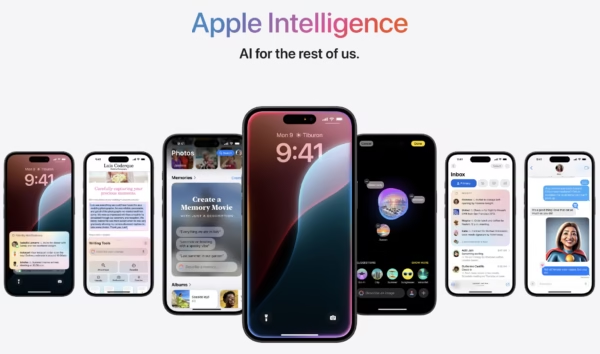
Hyderabad, India – August 22, 2025 – Apple has been making significant strides with its suite of AI-powered features, collectively known as Apple Intelligence. While some functionalities have already been rolled out to enhance the user experience, a wave of even more sophisticated features is on the horizon. This article breaks down the Apple Intelligence landscape, detailing what’s currently available, what’s coming next (with expected timelines), and crucially, which iPhone models will benefit from these advancements – and which will miss out.
Apple Intelligence: Features Already in Your Hands
Since its initial unveiling and subsequent iOS updates, Apple has quietly integrated several foundational AI capabilities under the Apple Intelligence umbrella. These features, while perhaps not always explicitly branded as such, leverage on-device processing and cloud-based models to enhance various aspects of the iPhone experience.
- Enhanced Siri Capabilities: The voice assistant has seen notable improvements in understanding natural language, contextual awareness, and the ability to handle more complex requests. Siri can now perform more actions within apps and across different applications, often anticipating user needs.
- Supported iPhones: Generally available on iPhone models powered by the A16 Bionic chip and later (iPhone 14 Pro models and newer). Some basic enhancements might be present on slightly older devices, but the full suite requires the Neural Engine capabilities of newer chips.
- iPhones Missing Out: iPhone SE (3rd generation), iPhone 13 series and older.
- Improved Spotlight Search: Spotlight has become smarter, offering more relevant and predictive results based on user habits and context. It can understand more natural language queries and provide quick actions directly from the search results.
- Supported iPhones: Similar to enhanced Siri, the more advanced capabilities are optimized for iPhones with the A16 Bionic chip and later.
- iPhones Missing Out: iPhone SE (3rd generation), iPhone 13 series and older might see basic improvements but lack the full intelligence.
- Live Text Enhancements: The ability to interact with text in images and videos has been refined, offering quicker detection, more language support, and expanded actions like translating text directly within the camera viewfinder.
- Supported iPhones: Generally available on iPhone models with the A15 Bionic chip and later (iPhone 13 series and newer).
- iPhones Missing Out: iPhone SE (2nd generation) and older.
- Visual Look Up Improvements: This feature can now recognize a wider range of objects, landmarks, plants, animals, and even identify breeds of pets, providing users with more detailed information directly from their photos.
- Supported iPhones: Primarily on iPhone models with the A15 Bionic chip and later.
- iPhones Missing Out: iPhone SE (2nd generation) and older.
The Future is Intelligent: Upcoming Apple Intelligence Features and Timelines
Apple has teased a more substantial rollout of Apple Intelligence features in future iOS updates. Based on industry reports and Apple’s own announcements, here’s a look at what’s expected:
- Smarter Notifications (Expected Late 2025/Early 2026): Rumors suggest a significant overhaul of the notification system. Apple Intelligence will be used to prioritize notifications based on importance and context, summarize long threads, and even suggest smart replies. This could drastically reduce notification overload.
- Expected Supported iPhones: Likely to require the advanced Neural Engine capabilities of the A17 Pro chip (iPhone 16 Pro models and newer) and possibly some features on the A16 Bionic and A17 Bionic.
- Expected iPhones Missing Out: iPhone 15 series and older could have limited access or miss out entirely on the most advanced aspects.
- Advanced Photo Editing Tools (Expected 2026): Leveraging generative AI, Apple is reportedly working on more powerful photo editing features. This could include the ability to intelligently fill in backgrounds, remove unwanted objects seamlessly, and even extend the boundaries of existing images.
- Expected Supported iPhones: Highly likely to be exclusive to the latest iPhone models featuring next-generation Neural Engine capabilities (likely the A18 or later chips). Significant on-device processing power will be crucial for these demanding tasks.
- Expected iPhones Missing Out: iPhone 16 series and older are likely to not support these advanced generative editing features.
- AI-Powered Summarization Tools Across Apps (Expected 2026/2027): Imagine Siri being able to summarize articles in Safari, notes in the Notes app, or even transcripts of voice memos. Apple is expected to integrate intelligent summarization capabilities across its ecosystem, powered by Apple Intelligence.
- Expected Supported iPhones: This might be a tiered rollout, with basic summarization available on iPhones with A16 Bionic and later, while more sophisticated summarization (e.g., of complex documents or audio) could require newer chips.
- Expected iPhones Missing Out: Older iPhones prior to the iPhone 14 Pro series might have limited or no access.
- Enhanced Mail and Messages Features (Ongoing Development): Expect continuous improvements to features like smart replies, grammar and spelling correction, and potentially AI-driven organization of emails and messages.
- Expected Supported iPhones: These will likely see a gradual rollout, with newer iPhones benefiting from more advanced and efficient implementations.
- Expected iPhones Missing Out: Older iPhones may receive basic updates but might not have the processing power for the most intelligent features.
The Chip Divide: Why Older iPhones Miss Out
The primary reason behind the varying support for Apple Intelligence features is the computational power offered by Apple’s custom-designed silicon, particularly the Neural Engine. This dedicated hardware accelerator is specifically optimized for machine learning tasks. Newer A-series and M-series chips feature increasingly powerful Neural Engines with more cores and greater processing efficiency.
Features like advanced photo editing and real-time summarization require significant on-device processing to ensure speed and user privacy. Older iPhone models simply lack the necessary hardware capabilities to run these complex AI models efficiently without impacting performance and battery life.
Implications for iPhone Users in India
For iPhone users in India, the rollout of Apple Intelligence signifies a continued push towards a more intuitive and personalized mobile experience. However, it also highlights the trend of newer, more powerful iPhones being required to access the most cutting-edge features. As Apple continues to invest heavily in AI, users with older iPhone models will increasingly find themselves missing out on the latest advancements, potentially influencing their upgrade decisions in the future.
The coming years promise a significant evolution in how we interact with our iPhones, with Apple Intelligence poised to play a central role. While the benefits will be substantial for those with the latest hardware, the “chip divide” will continue to shape the feature landscape for different generations of iPhones.