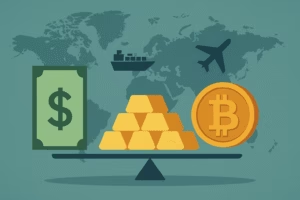
Nations from Beijing to Brasília are steadily reducing reliance on the U.S. dollar for trade and reserves, driven by geopolitics, sanctions and a long-term push to internationalize local currencies. China, Russia and India are the most visible movers, while other countries and central banks are buying gold. Europe shows a mix of hedging and pragmatism. Meanwhile, digital assets like Bitcoin are emerging as experimental diversification tools — and Washington, under President Donald Trump, is fighting back with tariff threats to protect the dollar’s global dominance.
De-dollarization: What’s Happening and Why
Countries are expanding bilateral trade arrangements that settle in local currencies — such as yuan-rupee or ruble-yuan deals — while building alternative payment systems and stockpiling gold to reduce exposure to dollar-based sanctions. Central banks are connecting to non-USD payment networks like China’s CIPS, and the BRICS group is developing its own alternatives to SWIFT.
The momentum intensified after Western sanctions on Russia in 2022 froze parts of its dollar reserves, prompting many nations to seek “currency independence.”
Where the Major Players Stand
- China: Beijing continues pushing for global use of the renminbi. The yuan now ranks among the top five global payment currencies, and its share in trade finance has grown sharply. China’s central bank has expanded swap lines and offshore yuan-clearing banks to boost liquidity and reduce dollar exposure.
- Russia: After the 2022 sanctions, Moscow rapidly shifted trade to local currencies, especially with BRICS and Asian partners. Much of its oil trade with India and China is now settled in rupees or yuan, making Russia one of the fastest movers in de-dollarization.
- India: New Delhi is quietly internationalizing the rupee. It has signed bilateral rupee trade agreements with several Asian, African and Latin American nations, aiming to make the rupee an invoicing currency for oil and defense imports. Progress is gradual but consistent.
Gold, Silver and Real Assets Make a Comeback
Central banks worldwide have been buying gold at record levels since 2022. The World Gold Council reports that sovereign purchases hit multi-decade highs in 2023 and 2024, led by China, Poland, Turkey and India. Gold offers insulation from sanctions and acts as a long-term hedge against dollar volatility.
Silver’s role remains minor, but smaller economies are exploring it as a reserve diversification option tied to industrial demand.
Europe: Hedging, Not Ditching
European economies — especially Germany and France — have modestly reduced their dollar reserves, replacing them with euros and gold. However, the continent’s deep integration with U.S. markets means the euro is supplementing, not supplanting, the dollar. European policymakers call it “risk diversification” rather than de-dollarization.
Bitcoin and Crypto: The Digital Hedge
While traditional assets dominate, digital currencies are quietly entering the discussion:
- Corporate Treasuries: Major corporations and funds are experimenting with holding Bitcoin as a “digital gold” hedge due to its scarcity and independence from central banks.
- Sovereign Interest: The United States under President Trump announced a “Strategic Bitcoin Reserve” initiative in 2025, signaling formal recognition of digital assets’ potential role in national finance.
- Other Governments: Bhutan has mined and held Bitcoin quietly since 2023. El Salvador continues to use Bitcoin as legal tender, though on a limited scale.
Despite growing attention, central banks remain cautious — citing volatility, regulatory risks and lack of historical precedent. For now, Bitcoin’s role is largely symbolic, representing a hedge against both inflation and dollar hegemony.
U.S. Pushback: Trump’s Tariff Threats
In a sharp response to global de-dollarization efforts, President Donald Trump has threatened sweeping tariffs on countries seeking to reduce dollar use in trade.
- In late 2024, Trump warned that BRICS nations — including India, China, Brazil, South Africa and Russia — could face 100 percent tariffs on exports to the U.S. if they attempted to create or back a new currency to challenge the dollar’s dominance.
- In mid-2025, he doubled down, announcing a 10 percent additional tariff on countries “aligning with anti-American BRICS policies” and accusing the bloc of trying to “destroy the U.S. dollar.”
- Analysts at the Peterson Institute for International Economics (PIIE) and other think tanks caution that these threats, while aimed at defending U.S. monetary supremacy, could have the opposite effect — pushing more nations toward alternative currencies and accelerating de-dollarization.
The Historical Context
Since World War II, the U.S. dollar has been the world’s primary reserve and trade currency — backed by deep capital markets, liquid Treasury securities and strong global trust in U.S. institutions. Previous challenges, such as the 1971 Nixon shock or the euro’s emergence in the 2000s, dented confidence but never displaced the dollar.
Today’s de-dollarization push is more coordinated and politically motivated. Yet, network effects, liquidity, and global legal frameworks still overwhelmingly favor the dollar.
The Bottom Line
De-dollarization is real and accelerating, particularly across the BRICS bloc and parts of Asia. Nations are diversifying reserves into gold, local currencies and digital assets to reduce geopolitical risk. However, the U.S. dollar remains unrivaled in global liquidity, market depth and institutional trust.
Washington’s tariff threats under Trump underscore the geopolitical tension surrounding this financial shift — but they may also reinforce the very trend they seek to prevent. The next few years will determine whether this global diversification is merely a hedge or the beginning of a true monetary reset.