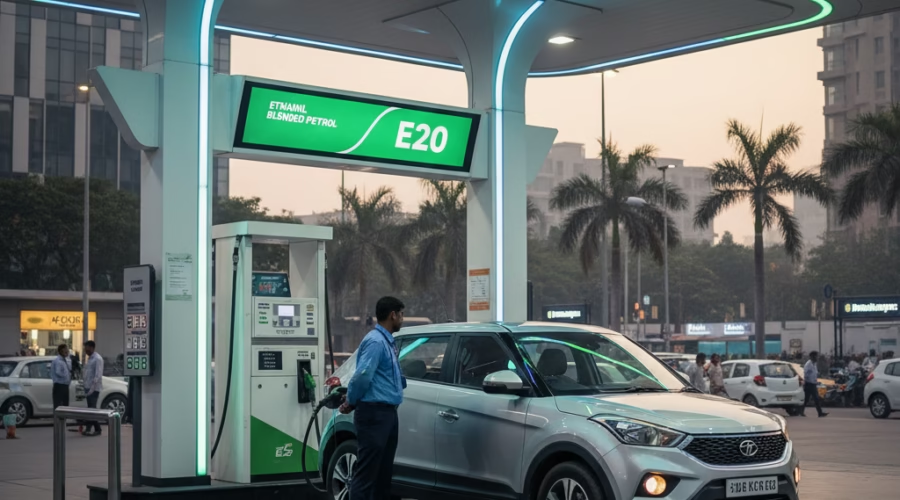
India’s aggressive move toward ethanol-blended petrol — E20 today and possibly E27 soon — is putting both automakers and motorists under scrutiny. With Union Transport Minister Nitin Gadkari spearheading the initiative, the goal is to cut crude-oil imports, reduce emissions and boost domestic ethanol production. Yet, many vehicle owners report lower mileage and doubts over long-term engine health.
Automakers under pressure
Most major carmakers have started adapting to the new norm. Honda, Hyundai, Tata Motors, and Maruti Suzuki have either confirmed or are in the process of making their current portfolios E20-compliant. However, not all models on the road are compatible. Cars manufactured before 2023 often lack the material resilience and fuel-system calibration needed to handle higher ethanol content.
The premium segment — including brands like Toyota, Skoda, and BMW — was among the first to align with E20 readiness. Budget and mid-range models are following suit, though cost and engineering constraints have slowed the transition. Manufacturers are working with the government to upgrade components such as fuel hoses, gaskets and injectors to ensure durability under ethanol exposure.
Policy and government roadmap
The government’s “Roadmap for Ethanol Blending in India 2020-25” outlines the timeline for scaling up ethanol content in petrol. E20 fuel has already become widely available in urban markets, and the government now aims to test and standardize E27 fuel within the next phase.
While there is no single law forcing every manufacturer to sell only E20/E27-compliant cars, regulatory approvals for new vehicles now consider ethanol compatibility. The Automotive Research Association of India (ARAI) and the Bureau of Indian Standards (BIS) are finalizing engine and material specifications for future compliance.
Impact on mileage and performance
One of the main complaints from motorists is reduced mileage when using E20 fuel. Ethanol contains less energy per litre than petrol, resulting in a natural dip in fuel efficiency. On average, users have reported mileage reductions between 2% and 4% in E20-compliant vehicles, and more significant drops in older cars not optimized for ethanol blends.
Ethanol’s chemical composition also attracts water, which can lead to corrosion of fuel-system components if the car isn’t properly designed. Modern engines, however, feature corrosion-resistant materials and adjusted compression ratios to minimize these issues. Automakers maintain that when vehicles are E20-ready, performance remains safe and reliable, with only minor efficiency differences.
Consumer concerns and manufacturer response
Owners of older vehicles remain uncertain about the long-term effects of E20 on engine health. While most manufacturers say that occasional use of E20 will not immediately damage older engines, frequent use can lead to fuel-line corrosion or injector clogging. Service centers have begun receiving more customer inquiries and minor repair cases linked to ethanol use.
Manufacturers are advising customers to check the vehicle manual or fuel-cap label for ethanol compatibility. Many brands have begun stamping “E20” on compliant vehicles for easy identification. Extended warranties and preventive maintenance plans are also being offered to reassure buyers.
The road to E27
The government’s next target, E27, will raise the ethanol content even higher. This could mean further recalibration for engines and material standards. Carmakers have voiced concerns about transitioning too quickly, warning that fuel infrastructure and consumer awareness need to evolve in parallel.
If implemented carefully, the E27 phase could bring substantial savings in import bills and emissions. But without technical readiness, India risks higher maintenance costs, inconsistent performance, and growing consumer resistance — issues already surfacing with E20 adoption.
What car buyers should do
- Check compatibility: Confirm with your dealer whether your vehicle is E20-compliant.
- Avoid unnecessary blending: For older cars, stick to regular petrol if available.
- Monitor performance: Keep track of mileage and smoothness when refueling with E20.
- Service regularly: Clean injectors and replace fuel filters more often.
Outlook
India’s ethanol-fuel transition is a bold step toward cleaner, self-reliant mobility. Automakers are largely on board, though the shift remains uneven across segments. As E27 discussions intensify, the real challenge will be synchronizing fuel supply, vehicle technology and consumer confidence.
For drivers, understanding your vehicle’s ethanol compatibility could save both fuel costs and future repair headaches. For manufacturers, transparency and faster compliance will define who leads in the next chapter of India’s green mobility push.