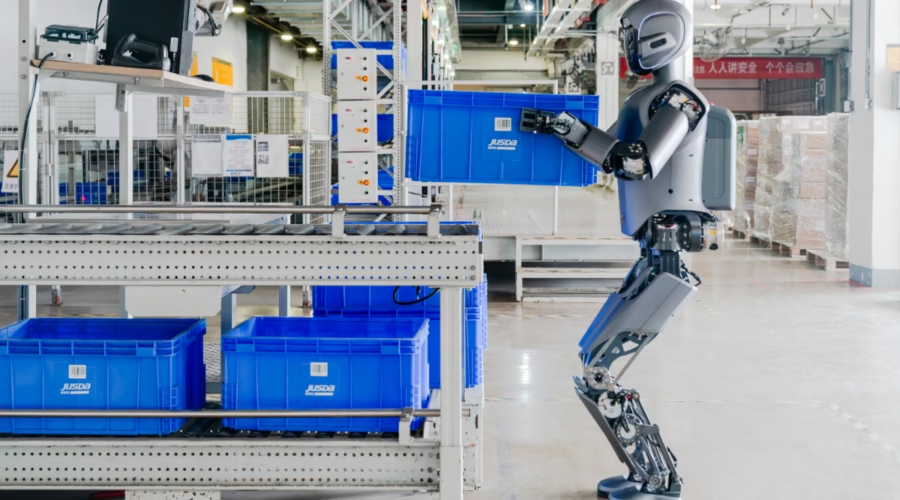
Taiwan-based Foxconn, one of the world’s largest electronics manufacturers, is undergoing a major transformation. The company is preparing to deploy humanoid robots at its upcoming AI server plant in Houston, marking a decisive move from human labor to robot-assisted production. This shift symbolizes Foxconn’s ambition to move away from what critics have called the “human factory” model — a system dependent on long hours, repetitive work, and tight production cycles.
Automation Push
Foxconn’s chairman recently confirmed that the company plans to replace a large portion of its low-skilled workforce with generative-AI-driven robots in the coming years. The Houston facility, expected to begin operations in early 2026, will be one of the first to integrate humanoid robots into large-scale assembly work.
The move reflects a growing trend among global manufacturers to invest in smart factory systems, designed to improve efficiency and reduce reliance on human labor. It also signals a shift in how manufacturing giants are preparing for the future — one where robotics, automation, and artificial intelligence redefine the assembly line.
Labour Controversies Continue
Despite its automation drive, Foxconn faces ongoing scrutiny over its treatment of human workers.
In India, the company’s iPhone assembly plant in Tamil Nadu came under fire for allegedly excluding married women from employment. Reports indicated that local hiring practices were biased, citing “family responsibilities” as a reason to avoid hiring them. Human rights authorities have since ordered a fresh investigation into Foxconn’s recruitment policies.
Meanwhile, in China, labor rights organizations have accused Foxconn’s factories of forcing excessive overtime and underpaying workers during peak production periods for the iPhone 17 line. Claims of long workweeks, withheld wages, and the illegal use of student workers have reignited criticism of Foxconn’s dependence on high-pressure production models.
These issues expose a sharp contrast between Foxconn’s futuristic automation vision and the ongoing challenges faced by its human workforce.
Why It Matters
For global supply chains, the stakes are high. Foxconn manufactures devices for some of the world’s biggest brands, including Apple, and any disruption or controversy affects those companies’ reputations.
From a manufacturing standpoint, the company’s automation push represents a fundamental restructuring of cost and efficiency models. By introducing humanoid robots, Foxconn aims to stabilize production quality, shorten lead times, and minimize labor risks — but that also raises fears of mass job displacement in regions like India and China.
For policymakers, the trend highlights the urgent need to upskill factory workers and create frameworks to manage the transition from manual labor to machine-led production.
The Road Ahead
Foxconn’s humanoid robots are expected to go live in early 2026, marking a symbolic beginning of its automation era. However, the company will still rely heavily on its human workforce for supervision, logistics, and high-precision tasks.
In India, labor authorities are reassessing factory conditions and hiring practices, while in China, watchdogs continue to monitor overtime and safety standards.
The balancing act between innovation and responsibility will define Foxconn’s global reputation in the coming decade.
The Broader Picture
Foxconn’s transformation encapsulates a larger industrial shift. Across sectors — from automobiles to electronics — robotic manufacturing is replacing repetitive human tasks. The benefits are clear: speed, consistency, and scalability. But the human cost remains unresolved.
For countries like India, which have positioned themselves as manufacturing hubs, Foxconn’s shift offers both an opportunity and a warning. Automation can bring high-tech jobs and investments, but it also demands new skills, better worker protections, and stronger oversight.