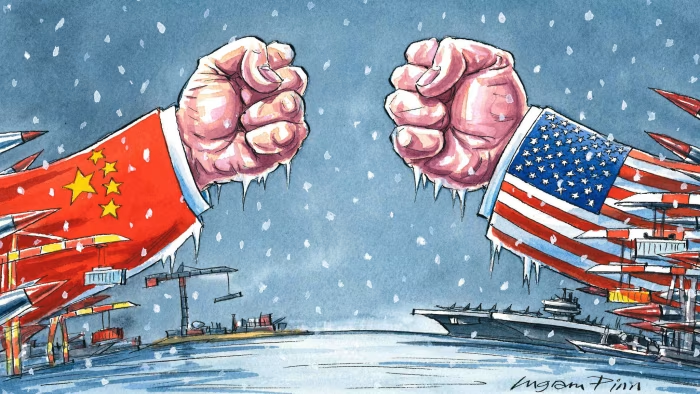
The United States has intensified its technology export restrictions on China, broadening controls over advanced semiconductors, artificial intelligence (AI) tools, and chipmaking equipment — a move signaling renewed tensions in the global tech landscape.
According to the latest directive from the U.S. Department of Commerce, American companies and foreign affiliates using U.S. technology must obtain special licenses before exporting high-performance chips or AI software to Chinese entities. The expanded list now includes additional Chinese semiconductor firms and research institutions accused of supporting military and surveillance projects.
Impact on China’s Tech Ecosystem
The tightened export controls are expected to hit China’s AI and semiconductor industries, already grappling with earlier sanctions that limited access to cutting-edge GPUs and manufacturing tools. Analysts say the new restrictions will slow down development in AI model training and high-end chip fabrication.
Chinese tech giants, including Huawei, Baidu, and Tencent, are likely to face fresh hurdles in obtaining advanced computing chips essential for AI and data center operations. Meanwhile, domestic chipmakers such as SMIC are under pressure to develop indigenous alternatives amid a growing “tech decoupling” trend.
Washington’s Strategic Move
U.S. officials argue the measures are essential to protect national security and prevent sensitive technology from being used for military or human rights violations. “These updates ensure that our export controls remain effective and reflect the rapid pace of technological change,” said a Commerce Department spokesperson.
The Biden administration’s move also aligns with broader efforts to strengthen alliances with Japan, the Netherlands, and South Korea — countries crucial to the semiconductor supply chain. These nations have already adopted similar restrictions targeting China’s access to lithography and fabrication tools.
Beijing’s Response
Beijing condemned the new rules, calling them an act of “technological containment.” The Chinese Ministry of Commerce urged Washington to “immediately withdraw its discriminatory measures” and warned of potential countermeasures. Experts believe China may retaliate by tightening exports of rare earth minerals vital for global chip production and electric vehicle batteries.
Global Tech Market Reaction
Investors reacted cautiously, with semiconductor stocks in both the U.S. and Asia showing increased volatility. Nvidia, AMD, and ASML shares slipped amid fears of reduced access to the Chinese market, which accounts for a large share of global chip demand.
Industry analysts note that the ongoing trade restrictions could fragment global supply chains, forcing companies to localize production and diversify sourcing. The U.S.-China standoff, they warn, could reshape the tech industry’s future and accelerate the race for technological self-reliance.