The craze of becoming famous and earning money through online platforms has grown rapidly over the years. Cooking, teaching, tech, entertainment (especially dance and comedy), and finance are some of the most popular and well-established—yet still evolving—genres on YouTube, Instagram, and Facebook in India.
However, within the food category, a concerning sub-genre has emerged: “food eating challenges” and bizarre cooking experiments. Exposing children and youth to such content carries serious short- and long-term health risks in a country already battling heart disease, diabetes, and obesity.
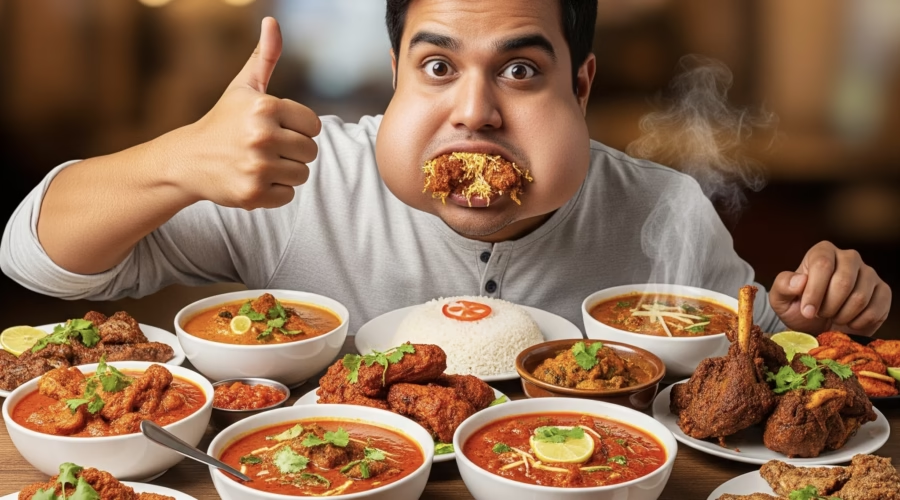
Food challenge videos typically feature creators consuming extreme amounts of food in one sitting, often against a timer. These challenges frequently involve multiple kilos of meat—chicken, mutton, seafood, and more. One such creator with over 1 million Facebook followers often attempts to finish “7 kg of chicken” or “an entire goat” in one sitting, sometimes competing against others to see who can eat faster.
Another popular blogger, also with more than 1 million Facebook followers, does similar stunts—such as consuming massive portions of spicy Korean noodles, or swallowing giant rotis stuffed with meat in a single gulp. Recently, he has even started inviting celebrities to witness these spectacles.
To stand out, other channels go even further. Some creators eat 8–10 raw green chilies in one bite, while others attempt to finish 25+ spicy samosas in under 5 minutes.
A recurring theme in such content is non-vegetarian food, sometimes even raw meat challenges. The creators often stuff their mouths to the point where chewing becomes impossible, yet exaggerate how “tasty” the food is while struggling to swallow. Many videos add a competitive angle by timing the consumption or placing cash bets on the winners.
And just like the IPL brings together top cricket players, these food challenge “stalwarts” occasionally collaborate, staging group competitions that resemble a national summit of eating challenges.
The bigger problem lies in the algorithm. Social media platforms tend to push similar videos once a user watches them even once or twice. As a result, these challenge videos easily rack up millions of views, flooding feeds with harmful content. This is particularly dangerous for children and young audiences. At a time when India is promoting campaigns like Fit India and Khelo India, such content reverses progress, encouraging unhealthy and reckless eating habits.
The risks are real. Recently, MSN News reported the tragic case of a 13-year-old boy in Egypt who died after consuming three packets of raw instant noodles. While not part of a food challenge, it demonstrates the fatal dangers of extreme or careless eating. Indian households have always taught the wisdom that “excess of anything is harmful,” a point doctors continue to emphasize.
In 2023, Mashable reported that YouTube banned eating disorder–related content, citing “imitable behavior” as a risk. However, this primarily targeted extreme calorie restriction—not binge-eating challenges.
India’s Health Ministry must step in before it’s too late. At the very least, such videos should be age-restricted, with stricter regulations if necessary.