The year 2025 is proving to be a landmark period in medical innovation with multiple breakthroughs that promise to revolutionize healthcare worldwide. Recent advances span from cutting-edge gene editing to revolutionary diagnostic tools and novel treatment methods that are reshaping patient care and outcomes.
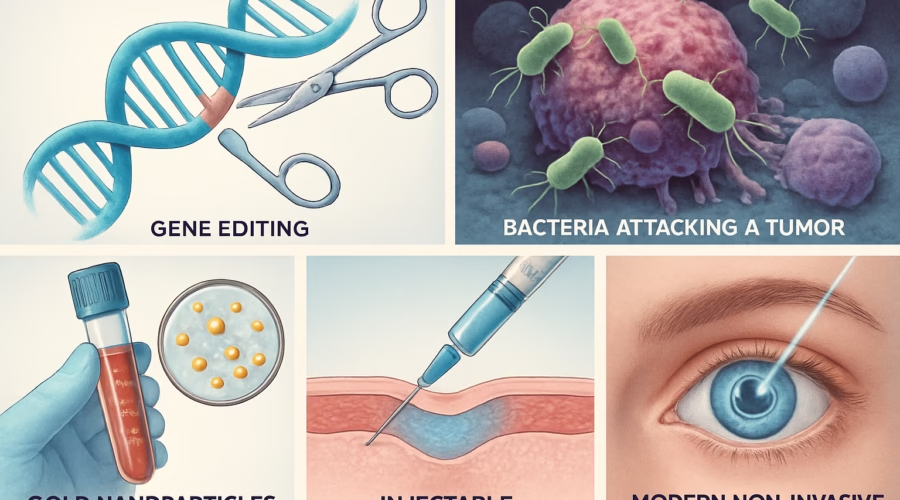
One of the most remarkable developments is the emergence of CRISPR therapeutics, where gene-editing techniques like CRISPR-Cas9 are advancing from clinical trials to effective treatments. Newer methods such as base editing and epigenetic modulation offer precision control in addressing genetic disorders, cancers, and rare diseases, moving medicine closer to curative therapies rather than just symptom management.
Another milestone is the development of a one-drop blood test capable of detecting multiple deadly diseases such as COVID-19, Ebola, HIV, and Lyme disease with unmatched speed and accuracy. This test, named NasRED, uses gold nanoparticle technology to empower rapid diagnosis, which is critical in controlling epidemics and improving patient outcomes.
In cancer treatment, scientists have engineered an innovative approach using bacteria to deliver cancer-killing viruses directly into tumors, bypassing the immune system, and providing a powerful dual attack on cancer cells. This method holds promise for treating hard-to-reach tumors and overcoming resistance to conventional therapies.
Other breakthroughs include a “skin in a syringe” injectable gel developed to heal burn wounds without scarring and new, surgery-free alternatives to LASIK eye correction using electric stimulation rather than lasers—demonstrating how technology is making treatments less invasive and more patient-friendly.
Moreover, researchers have uncovered that even mild COVID-19 infections may accelerate vascular aging by five years, emphasizing the importance of vaccination and long-term health monitoring.
These innovations underscore the critical role of collaborative research, combining biotechnology, nanotechnology, and AI, in pushing the boundaries of medical possibilities. As these technologies continue to mature, patients worldwide stand to benefit from earlier diagnoses, personalized therapies, and less invasive treatments.
The surge of breakthroughs in 2025 signals an optimistic trajectory for global healthcare, with promising advances not only in treating life-threatening diseases but also improving quality of life and longevity.