New Delhi, [August 13th, 2025] — Prime Minister Narendra Modi has brought obesity into the national spotlight, launching a public health campaign aimed at curbing the rising epidemic through simple lifestyle changes, awareness drives, and localized policy action.
Spotlight on the Crisis
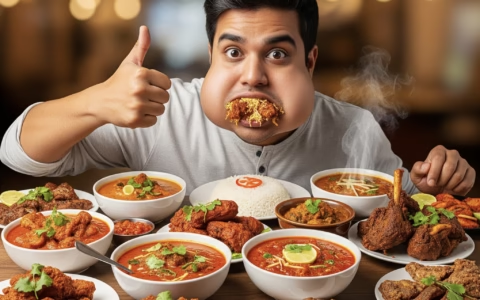
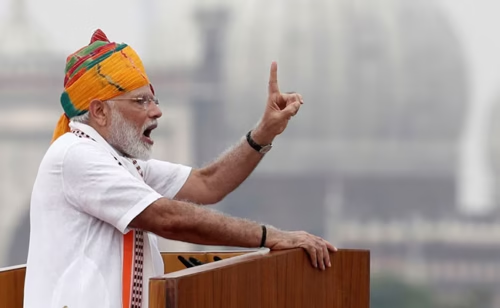
In his February address on Mann Ki Baat, Modi cited WHO estimates that 2.5 billion people globally are overweight and emphasized the importance of reducing edible oil consumption by 10%. He called obesity a pressing health concern that not only affects individuals but also burdens families and society. According to the Prime Minister, the number of obese individuals in India has doubled, with one in eight affected and childhood obesity surging dramatically.
Celebrity-Driven Movement
To extend the initiative’s reach, Modi nominated ten prominent figures—spanning business, entertainment, sports, and philanthropy—to champion the cause and amplify awareness:
- Anand Mahindra
- Mohanlal
- R. Madhavan
- Shreya Ghoshal
- Sudha Murty
- Nandan Nilekani
- Mirabai Chanu
- Manu Bhaker
- Omar Abdullah
- Nirahua (Dinesh Lal Yadav)
Each nominee was encouraged to further nominate ten others, creating a grassroots-style, chain reaction for healthy behavior change. Sports icons like Neeraj Chopra and Nikhat Zareen also voiced their support, urging families to embrace physical activity and mindful eating.
Policy and Institutional Support
The Food Safety and Standards Authority of India (FSSAI) has backed the initiative by urging states and territories to step up localized efforts—particularly encouraging a 10% reduction in oil consumption. It also recommended schools install ‘sugar boards’ to help monitor and reduce children’s sugar intake as part of broader preventive health measures.
Meanwhile, in Rajasthan, ‘sugar and oil boards’ are being installed in public buildings—government offices, schools, hospitals, and bus stands—providing visual cues on the calorie and fat content of common snacks like samosas and pizza, nudging citizens toward healthier choices. OBILoss clinics are also being set up across medical colleges and district hospitals to offer counseling and weight-management support.
Why It Matters
This campaign signals a shift toward preventive healthcare in India—leveraging social influence, behavioral nudges, and institutional collaboration to slow obesity’s spread. By combining celebrity engagement with policy-driven nudges and infrastructure, the initiative hopes to make healthy living both accessible and aspirational.
However, critics argue that lasting impact requires stronger measures—like regulations on processed foods and widespread access to affordable healthy alternatives—to complement awareness efforts. Still, Modi’s campaign sets the stage for a nationwide conversation on health and wellness.