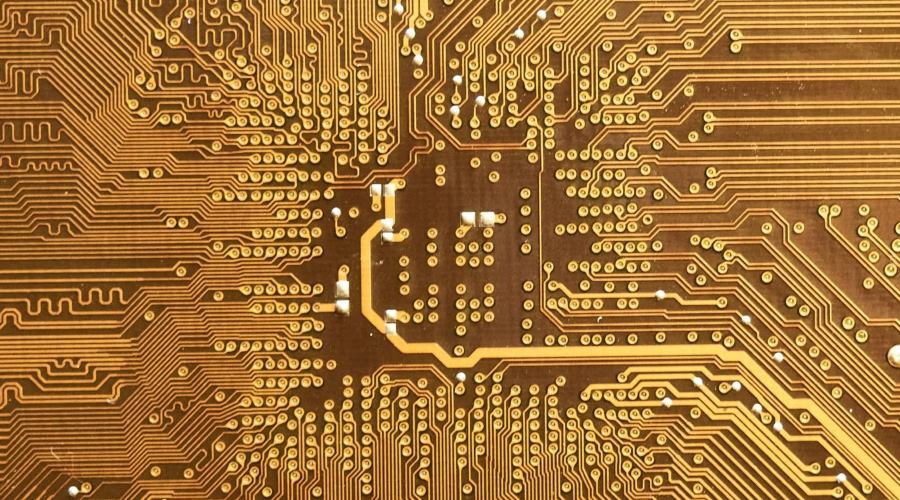
Once confined to futuristic labs, quantum computing is rapidly moving toward real-world applications that could soon touch the lives of ordinary people. By harnessing the strange physics of quantum bits (qubits), these machines can process massive amounts of data far faster than traditional computers.
Industry experts believe that as quantum processors shrink and become more energy-efficient, they could be integrated into handheld devices such as smartphones, wearables, and portable medical scanners. This could revolutionize everyday technology much like the shift from landlines to mobile phones did two decades ago.
How It Could Change Daily Life
- Instant Problem-Solving: A phone with a built-in quantum chip could calculate optimal travel routes in real time, even factoring in unpredictable variables like sudden weather changes or road closures.
- Personalized Medicine: Portable devices could run complex genetic analysis on the spot, enabling doctors—or even patients themselves—to get customized treatment recommendations instantly.
- Advanced AI at Your Fingertips: Quantum-enhanced AI assistants could understand and process complex natural language, handle large-scale translations, and perform real-time decision-making without cloud connectivity.
- Ultra-Secure Communication: Quantum encryption could make personal and financial data virtually unhackable, bringing unprecedented security to digital transactions.
The Risks and Dangers
Despite the promise, quantum integration in consumer electronics carries risks.
- Security Paradox: While quantum encryption offers strong protection, quantum-powered hacking tools could also break many current security systems overnight, creating a race between protection and exploitation.
- Cost and Accessibility: High production costs may initially limit access to wealthier users, widening the digital divide.
- Privacy Concerns: Quantum-enabled devices could process and store vast amounts of personal data locally, raising questions about misuse or overreach by corporations and governments.
- Disruption of Industries: Banking, cybersecurity, and even job markets could face upheaval if quantum algorithms replace traditional processes too quickly.
Looking Ahead
Companies from Silicon Valley to Bangalore are already racing to miniaturize quantum processors. While mainstream adoption in handheld devices may still be a decade away, the pace of research suggests we’re on the brink of a computing revolution.
If developed responsibly, quantum technology could make our devices faster, smarter, and more secure than ever—potentially transforming everyday life. But without strong safeguards, it could also unleash challenges far more complex than the problems it aims to solve.